

What makes someone truly delighted by an experience? Not just satisfied, but telling friends about it, returning for more, and remembering it months later?
Let me tell you of a simple example. Dining out in a restaurant.
Scenario One: The Standard Dining Experience
You enter the restaurant. You’re seated. You read the menu and order. Your meal arrives on time and is exactly as expected. The bill is what you anticipated. You pay and leave.
The experience is perfectly fine, but nothing out of the norm.
Would you tip more than usual? Probably not. This is nothing more than a transactional experience. It is efficient, predictable, but emotionally neutral.
When I hosted a talk at the latest Natter event last week, I asked this exact question. The results speak for themselves.
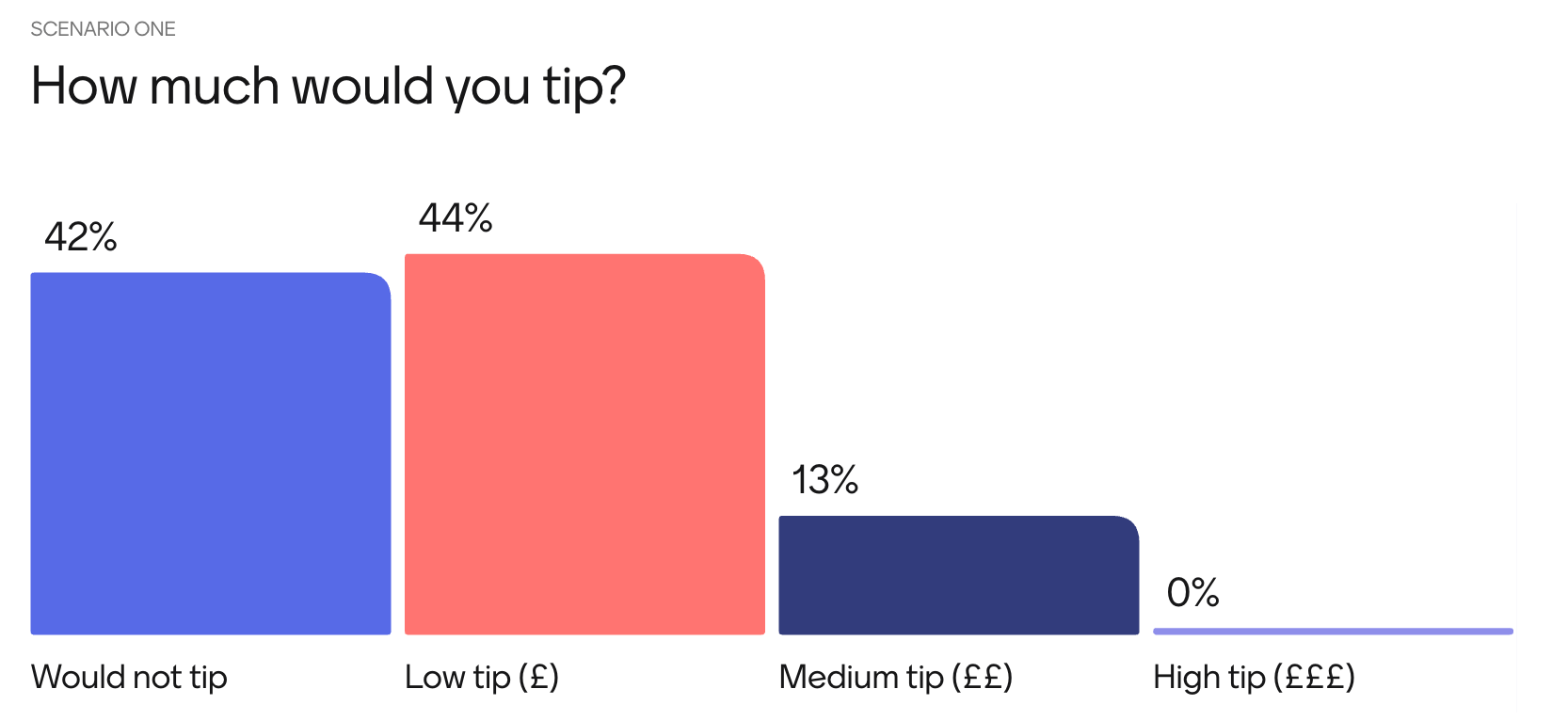
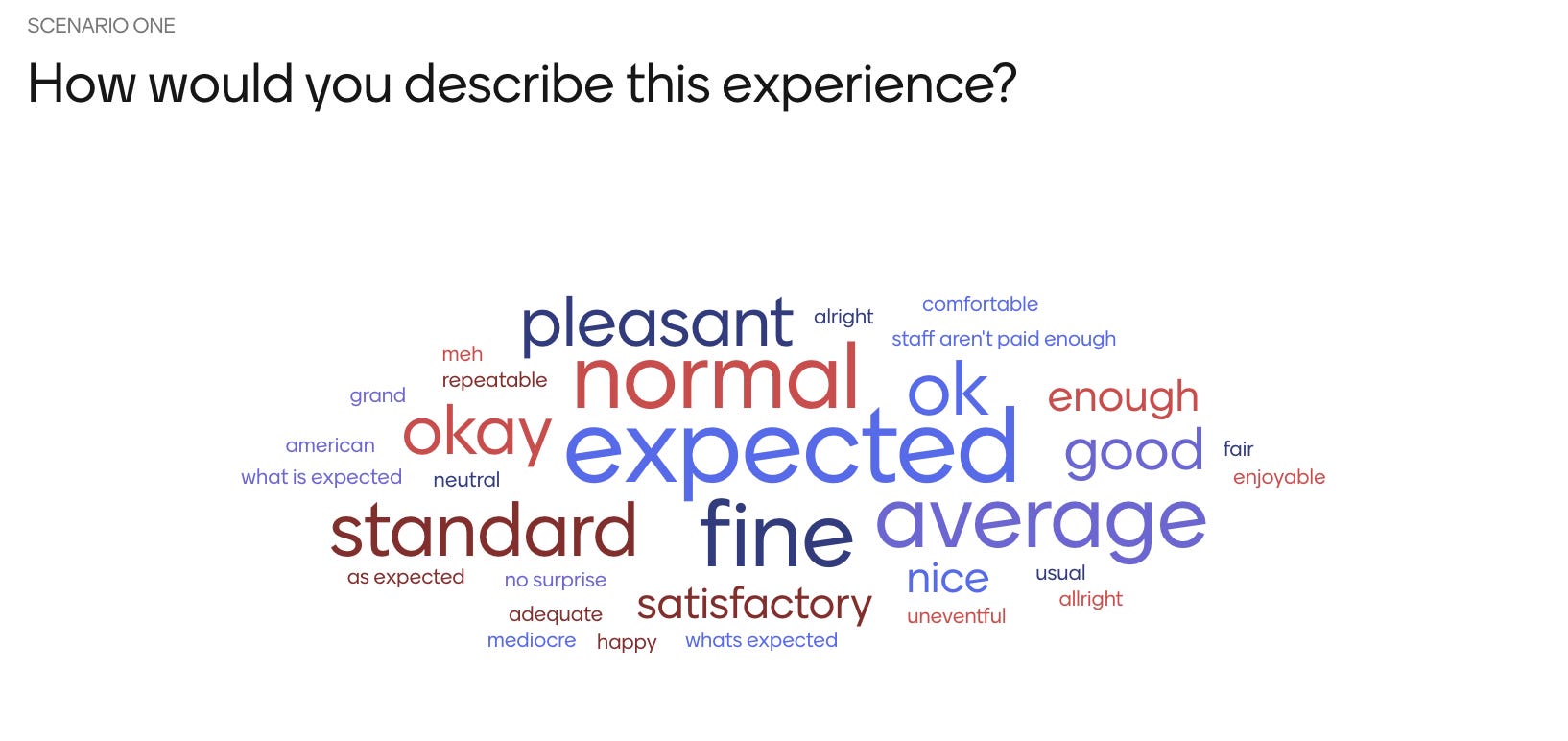
It is not surprising that the audience did not want to tip much (if at all), as the experience was what they expected but nothing more.
Scenario Two: The Enhanced Dining Experience
Now let’s change some things up.
Imagine you went out to dine at a restaurant. You are welcomed personally by the team upon arrival. When you were shown to your table, the serving team asked about any allergies and preferences. These were noted by the team, and recommendations were given which were tailored to these.
When booking, you mentioned you were celebrating an occasion, and your serving team offered you a complimentary dessert or glass of prosecco to help you celebrate. This was at the same time they checked back on you to make sure your experience was going well, and if anything could be done to improve it.
As the bill arrives, you see a small handwritten note left thanking you for dining there, and this is accompanied by a mint for each person.
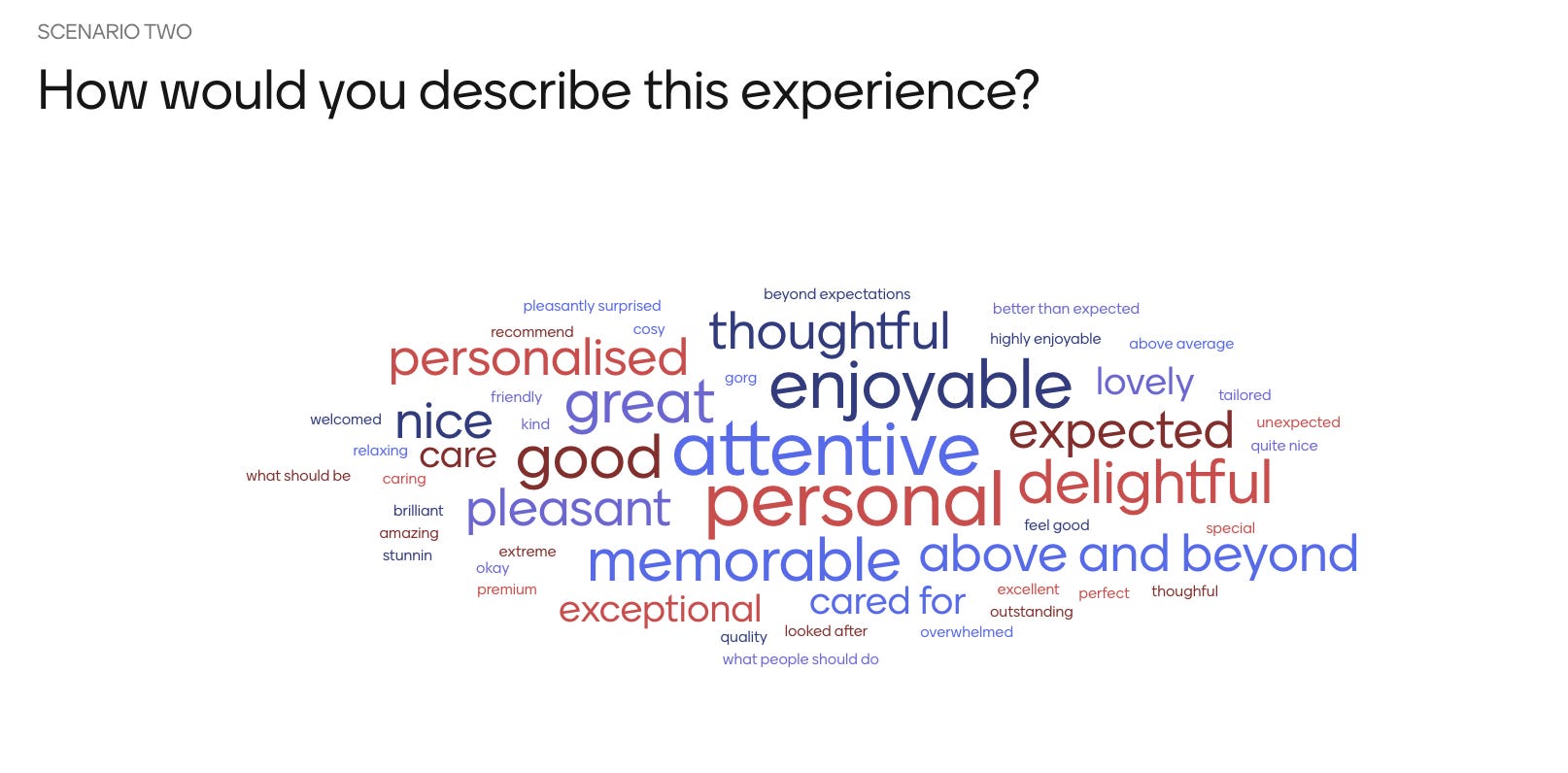
Suddenly, the experience feels personal, thoughtful, and memorable. It’s not just about the food, it’s about how the restaurant made you feel.
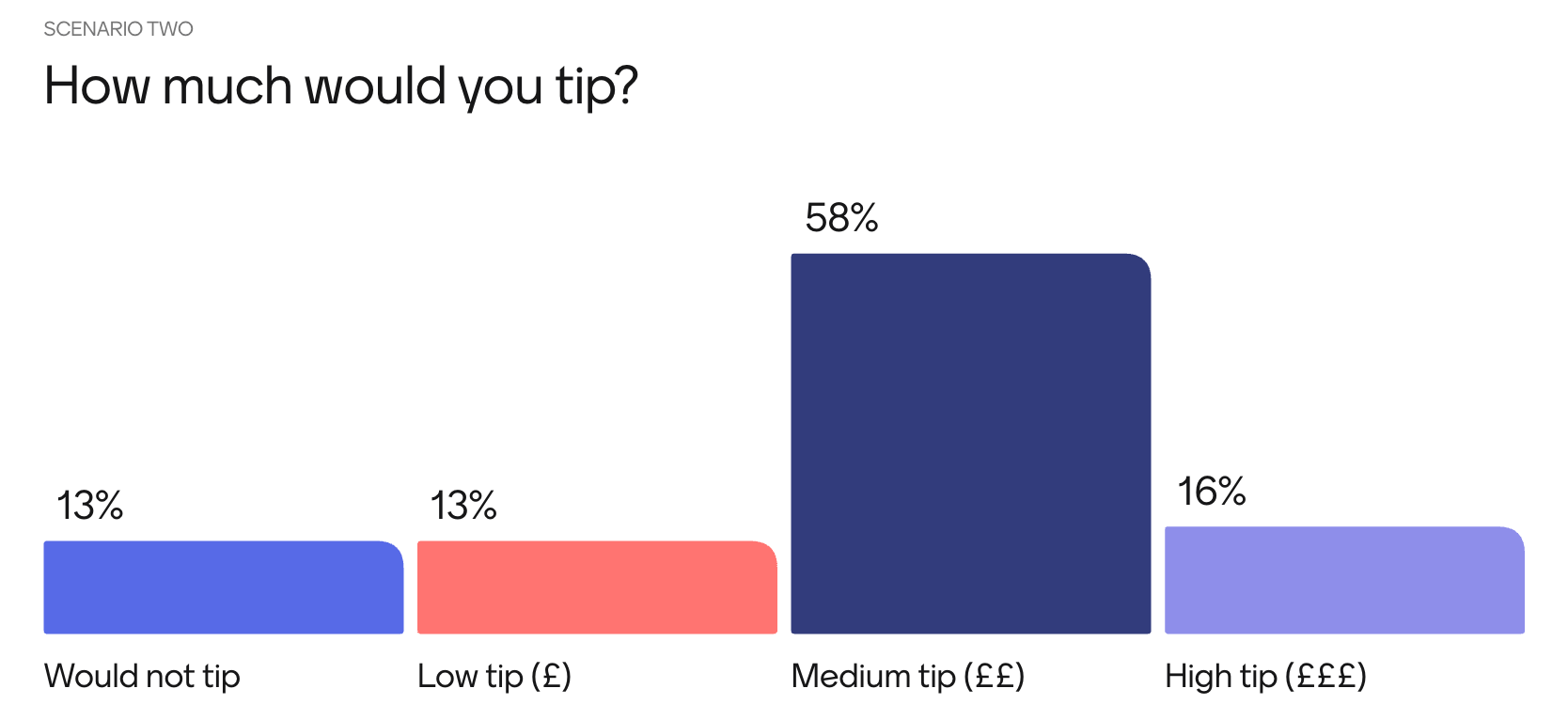
And looking at the results from the Natter event, you can see that people are more inclined to be more generous with the tip.
So, how are experiences built?
From my research and observations, experiences can be broken down into three layers:
60% transactional - This is what people expect from the experience based on what they have seen through marketing and sales channels.
30% emotional - This is where brands exceed expectations and differentiate themselves from the competition.
10% relational - This is the “magic moments” that surprise, delight, and build long-term relationships. This is where the true commercial value of an experience lies.
Case Study (Physical): Disney Parks and Resorts
Disney Parks around the world are renowned for their ability to provide guests with experiences that create connection, nostalgia and family-friendly fun. They are known for their incredible guest service, attention to detail and entertainment offerings.
But what keeps people returning to the parks time and time again?
Well, let’s take the 60/30/10 rule from above and apply it here.
60% transactional - Guests expect to go on rides, meet characters, see shows and fireworks. This is what they have seen through marketing channels to help sell the experience.
30% emotional - This is where Disney has gone above and beyond to create a better experience than the expectation and exceeds their competitors’ offerings. This could be something like shorter-than-expected wait times or perhaps the ability to restock merchandise faster to ensure that guests don’t miss out. These can be built into systems that support the operation.
10% relational (magic moment) - This is where Disney goes above and beyond what the guest expects to provide an experience that creates a relationship. This relationship is what will cause the guest to return time and time again.
What made the interaction of a deaf child with Minnie Mouse and Tinkerbell a Magic Moment?
Personalisation - Characters communicate in a way meaningful to the guest through sign language and getting down to her level.
Timing - The interaction occurs during a character meet-and-greet, not lost in a crowded environment.
Trust - Parents feel that Disney went above and beyond to care for their child and make the experience special.
What impact does this have on the commercial business?
Repeat visits.
Word-of-mouth promotion.
Social credibility for being known as an inclusive organisation.
Increased revenue from the activities above.
Case Study (Digital): Airbnb
Everyone knows Airbnb as the alternative to the corporate hotel experience that people can find all over the globe. Even from its inception, it was to give that extra service that people couldn’t get at a hotel.
Fast forward to today. What makes the digital Airbnb experience stand out from the crowd?
60% transactional - Users expect to see global availability and a variety of accommodation types.
30% emotional - Users can read guest reviews, which help build an emotional connection through trust, travel style, location feel, and help build the host’s reputation.
10% relational - The addition of micro-interactions on the platform helps to make the digital experience feel more human. Adding these interactions is the digital equivalent of a friendly hello in a café.
Micro interactions are often overlooked in digital products, especially when timelines and budgets are tight, to create a minimal viable product (MVP).
I can appreciate the need for delivery speed, but these micro-interactions help to build the relationship with your users and create moments of joy and delight. They also do the following:
Make digital products more enjoyable and memorable to use.
Encourage repeat use and positive word-of-mouth.
Aid onboarding, provide feedback, prevent errors and guide users intuitively.
Allow brands to express personality and delight creatively.
How can you measure the magic?
No work is undertaken in a business without a commercial reason and objective right? Well, magic can also be measured to see how it is providing real value to the bottom line.
None of these metrics will be new, and they are perhaps already in use within your product, but they can be used to see how the moment of joy and delight adds to commercial goals. My advice here is to ensure that you have created a baseline first to track the change.
Net Promoter Score (NPS)
Customer Satisfaction (CSAT)
Conversion rates
Task completion rates
Bounce rates and active users
Return rates and referrals
Loyalty points
Key Takeaways for Designers and Brands
Empathy is a designer’s superpower; use it to create delight.
Magic moments can’t be automated; AI can support but not replace them.
Stop treating MVPs as the “gold standard.” Look for opportunities to exceed expectations.
Observe both power users and churned users for inspiration.
Context matters: timing, relevance, and simplicity are key.
“…is the moment where you achieve to go beyond customer expectations and requirements. It’s the moment where you leave your target audience speechless, out of words and mesmerised by the success of your business”
When we design experiences with care, intention, and empathy, we create moments that people remember and that create real business impact.
Have fun creating memorable experiences for your audience.
Need some advice?
Have you got an experience project that could do with some support? Designing a truly engaging experience is no easy feat to ensure that you get it right.
Let’s talk more to see how I can help you deliver something magical.