
So health has always been a personal issue. I mean can we really get any more personal than talking about what goes on inside our own bodies! Plus, the health of ourselves and loved ones has never been more highlighted than in the last two years. But how do we know if we are in tip-top condition?
Well for some time I have been using a FitBit Versa and loved the experience of it tracking various stats that help me to stay active and push myself further. However, recently, I decided to upgrade to the Apple Watch as I wanted to see more additional information that wasn’t currently available through my FitBit such as ECG, Blood O2 etc...
And I love the Apple Watch! It’s great and does everything that I want whilst also looking stylish!
However, gaining all of this data is pointless unless there is a way to easily analyse it in a way that makes sense to me. Shock horror, I don’t have a medical degree and am not familiar with some of the terminology.
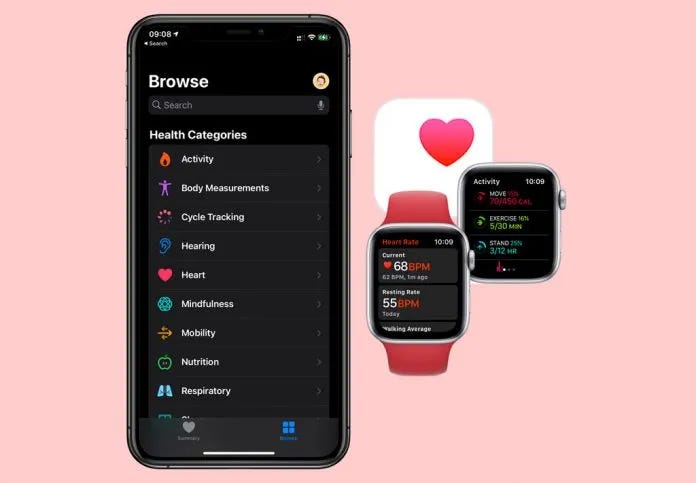
The Apple Health app overwhelmed me. Don’t get me wrong, it’s able to track everything from the basic steps completed and calories burned, to more intense metrics such as inhaler usage, ECG readings and more. The app allows me to keep an eye on lots of different areas of my life. But is there too much data to keep track of that is causing cognitive overload?
In the words of Steve Krug in his book Don’t Make Me Think, from the chapter about street signs, it is like walking into the shopping mall and unsure of where to visit first.
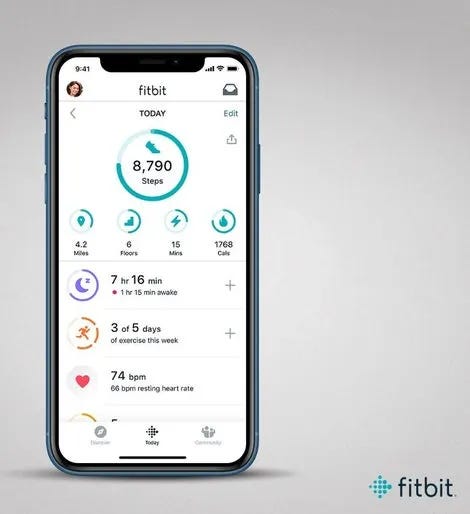
From my time as a FitBit user, I became accustomed to the app dashboard that gave me the quick metrics that were important on the system (steps taken, distance travelled, floors climbed, calories burned and active minutes). This was great as I could see how I was getting on in the day at a quick glance and the app would also congratulate me once I had hit my target with an animation.
However, I still had my reservations about this as well.
As I have said above, I believe that health is very personal and different metrics are important to different people. So the experience is dampened if the focus of your health isn’t staying active.
If for example, you have diabetes, then your blood glucose level would be of paramount importance. If you have asthma then inhaler usage and peak flow would be of importance. Then there is menstrual cycle tracking and nutrition… I mean the list is endless and the options for personalisation needed are greater.
Well, hasn’t the solution already been devised with widgets?
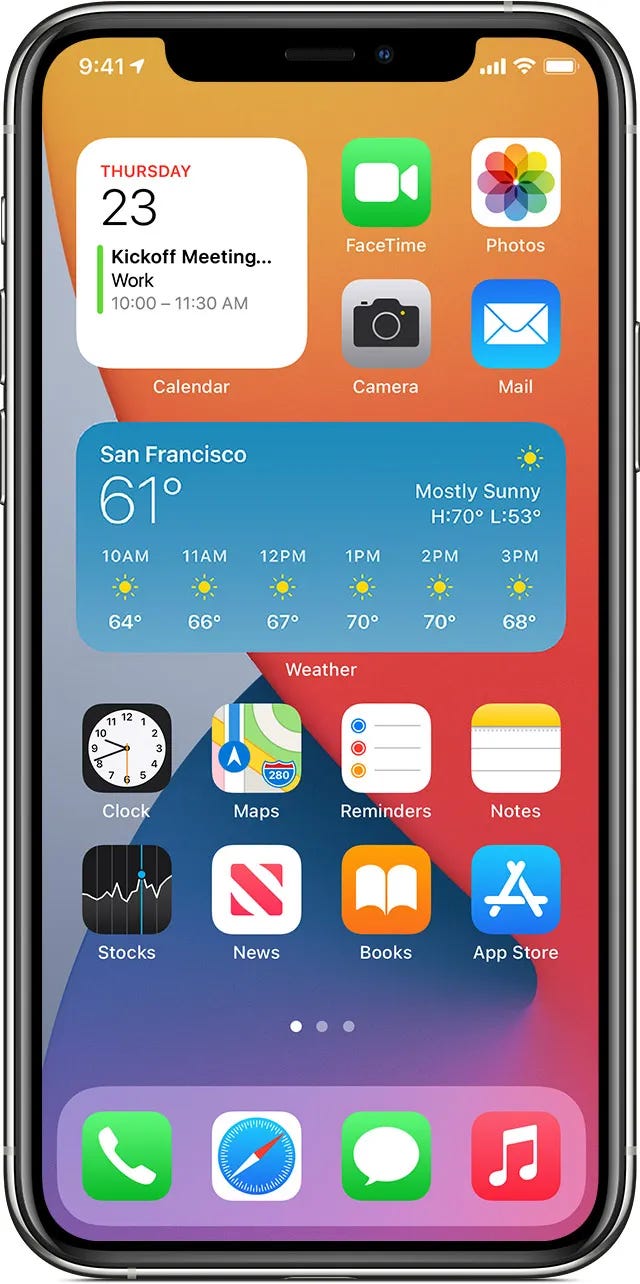
In iOS14, Apple introduced widgets for the home screen and it became popular as people were able to design their home screen however they wanted to.
Can this not be extended to be present within the Health App as well?
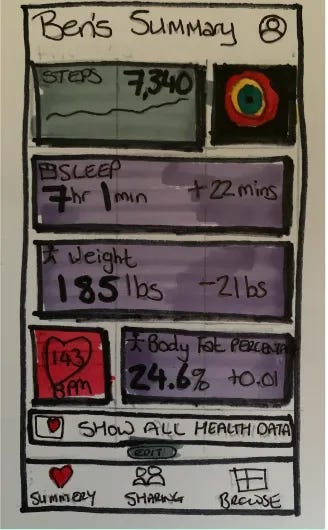
Well, I think so and here is a design of an idea that would allow people to personalise their Health app with the data that matters most to them.
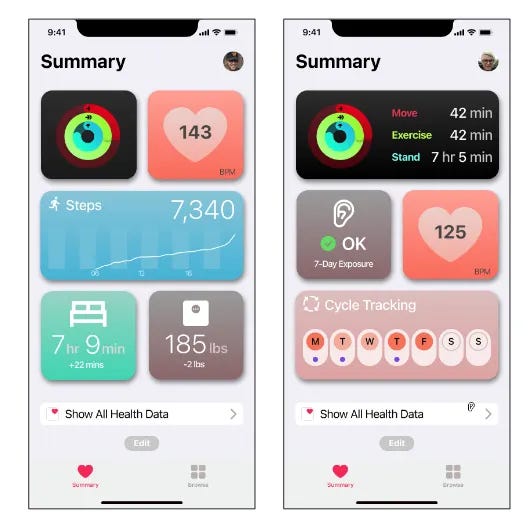
Within this example, I have kept to the basic stats which everyone will be familiar with. Widgets will operate in the same way as other Apple Widgets where they can be resized to various different options depending on the user’s preference.
Alongside this, there will be a version of the widget library where the users can add ones for the data of their choice. Ideally, it would be good if these widgets could also be added to the home screen as well for quick viewing.
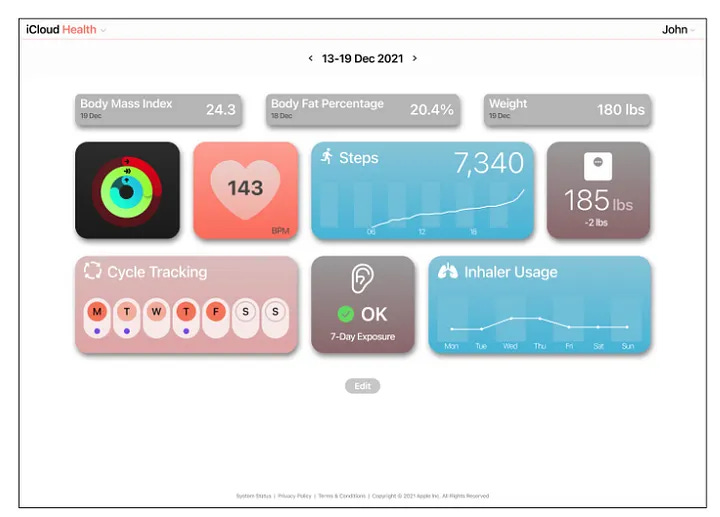
I also believe that extending this to work within the iCloud system as well allows for easy viewing when at a desktop. Again, this view can be customised to the user’s preference.
Let’s make Health as personal as each individual.
What are your thoughts?