
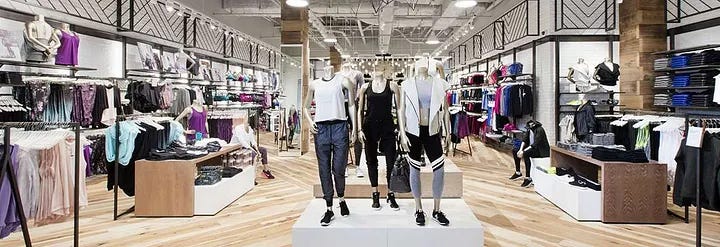
Stores have changed drastically over the years. In the past, a store was only for practical uses, and a customer needed to know what they wanted to buy before they walked in. Think of a gentleman that wants a suit. He would head into a store in Saville Row and be able to get what he wanted. No extras or frills.
Then along came Aristide Boucicaut and his department store Le Bon Marché. Cracow School of Art and Fashion Design writes that it was his idea to create a commercial space that attracted customers to explore it. As time evolved and the world was introduced to other department stores, such as Selfridge’s, it revolutionised the high street and also the way we shopped. Suddenly, shopping became an experience, rather than a necessity, and visual merchandising became a huge part of crafting this experience.
Stores have always been segregated into departments that make logical sense to us. For this article, I will mainly be focusing on clothing to highlight my point, so think womenswear, menswear, childrenswear (boys and girls). This segregation made it easier for the customer to navigate through the store to find what they needed and helped the store increase its market offering and turnover. I am completely ok with adding some logic to way-finding around stores, particularly large department stores. I mean could you imagine walking around the 1.25 million square foot sales floor at Macy’s in Herald Square NYC without any organisation! Talk about sitting in a corner and crying to find what you need, or even your way out!
Well, the retailers decided to segment the floors even further, particularly womenswear. Now next time you walk into a larger store you will not just see a section for women, but a section for the smaller person, a section for the taller person, a section for the larger person, a section for wide feet people, a section for small feet people … I mean the list could go on and on!
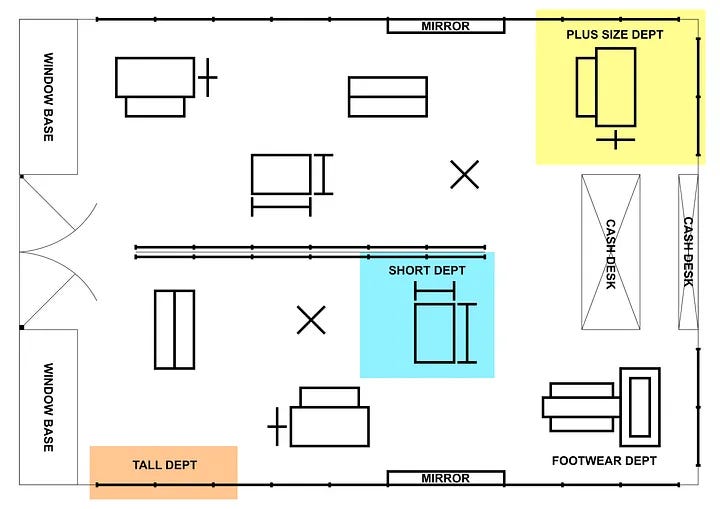
I wonder what was the reason for so much segregation on the sales floor? But more importantly, which section is given the largest and prime space on the sales floor? Does this mean that the customers of the other sections are not worthy to the business? I suppose this segregation is an effort by the brand to make them more ‘inclusive’ to each shopper so that they can buy into the brand lifestyle. When in fact they are doing the opposite.
Think back to the old days when Abercrombie & Fitch and Hollister would only cater to small sizes or needed the men to look like they had every muscle toned to perfection? Why was that business model so popular though? The reason, because people wanted to buy into the ‘cool’ lifestyle that the brand was pushing and the marketing department did a great job at selling to their captive market of teens.
But what about the rest of the market that didn’t fit that ‘ideal’ body image? Were you allowed to shop there?
I cannot deny that brands are making progress to make their customers feel more welcome in their stores. But change really is taking too much time for an industry which is declining.
Since the rise of online shopping, the high street brick and mortar store has been under attack to compete with their digital counterparts. Often they are failing due to being more costly to operate and the opportunity for customers to shop 24/7 from the comfort of their own home. However, there is an opportunity that sets physical stores out from e-commerce platforms which is the experience.
A store should be a physical representation of the brand. From the clothing lines that it chooses to offer, the lighting, the music, the store aesthetic (both outside and in), the visual merchandising style, the marketing, the customer service model, the window designs…everything is carefully thought through to manifest the brand image to the customer.
So why are brands still alienating customers from their stores that are so vital to their survival? Why are brands in 2021 still believing that segregated departments are good for service? Why, by the layout of the store, are people unconsciously deciding if their custom is valued to the business, or if they are just an ‘add on’ pushed in the corner that the business is doing to increase its profits?
So, if that’s the case, then what is the solution? How can we make everyone included within the shopping experience?
Well, firstly there is no tall section, or plus section, or short section. Instead, each line that is sold by the brand is offered in sizes that range from small to large and incorporates every body type. Obviously, changes may need to be made to the garment pattern to make it work, but we are already doing this for childrenswear, so why not for the adults?
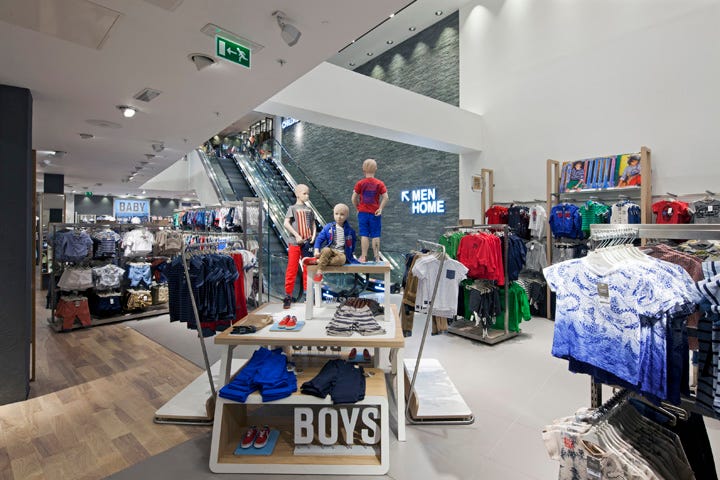
Next, the environment of the store should be accessible. Aisles should be wide enough for a wheelchair or pram to navigate through with ease. The lighting shouldn’t resemble that of a nightclub where you cannot tell if you are buying a red t-shirt or pink t-shirt. Yes that really has happened to me! The soundscape should enhance the shopping experience and match the mood of the brand without being overpowering to the point where you feel you are being rude to customers by asking them to repeat themselves.
Customer service is imperative in stores. To make this inclusive, there should be no bias. Excellent customer service should be where a staff member goes out of their way to do the best for their customers, and this should be done without judgement. Of course, there is the opportunity to support and advise, because let’s face it when we are talking about technical clothing (outdoor clothing, suits, bras), sometimes it is good in order to get the best value for your money. However, this should be done in a manner that puts the customer at the centre of the interaction and allows them to feel comfortable and supported in the shopping experience.
Finally marketing. Customer’s should be able to see a representation of themselves in the brand’s marketing. Social media should be diverse, in-store imagery should display a range of people from all walks of life and mannequins shouldn’t all be either size 2 women or men that look like they could be cast in the new series of Baywatch!
Gen Z is all about breaking down stereotypes, remining independant but keeping an emphasis on product value. I think that the retail industry need to do the same. Does it matter if a man finds a jumper in the women’s department that fits better? Does it feel good when you can look in a store window and see a mannequin cluster of a family unit made up of all different sized people?
The high street is changing, but it needs to continue to change more in order to keep customers coming into the stores rather than sitting with a laptop at home to make their purchases. The opportunity to make the high street store a success is possible to give customers a truly unique experience that makes them a loyal and repeat customer. However, we need to let go of our old ways and embrace the future of inclusivity and diversity.